
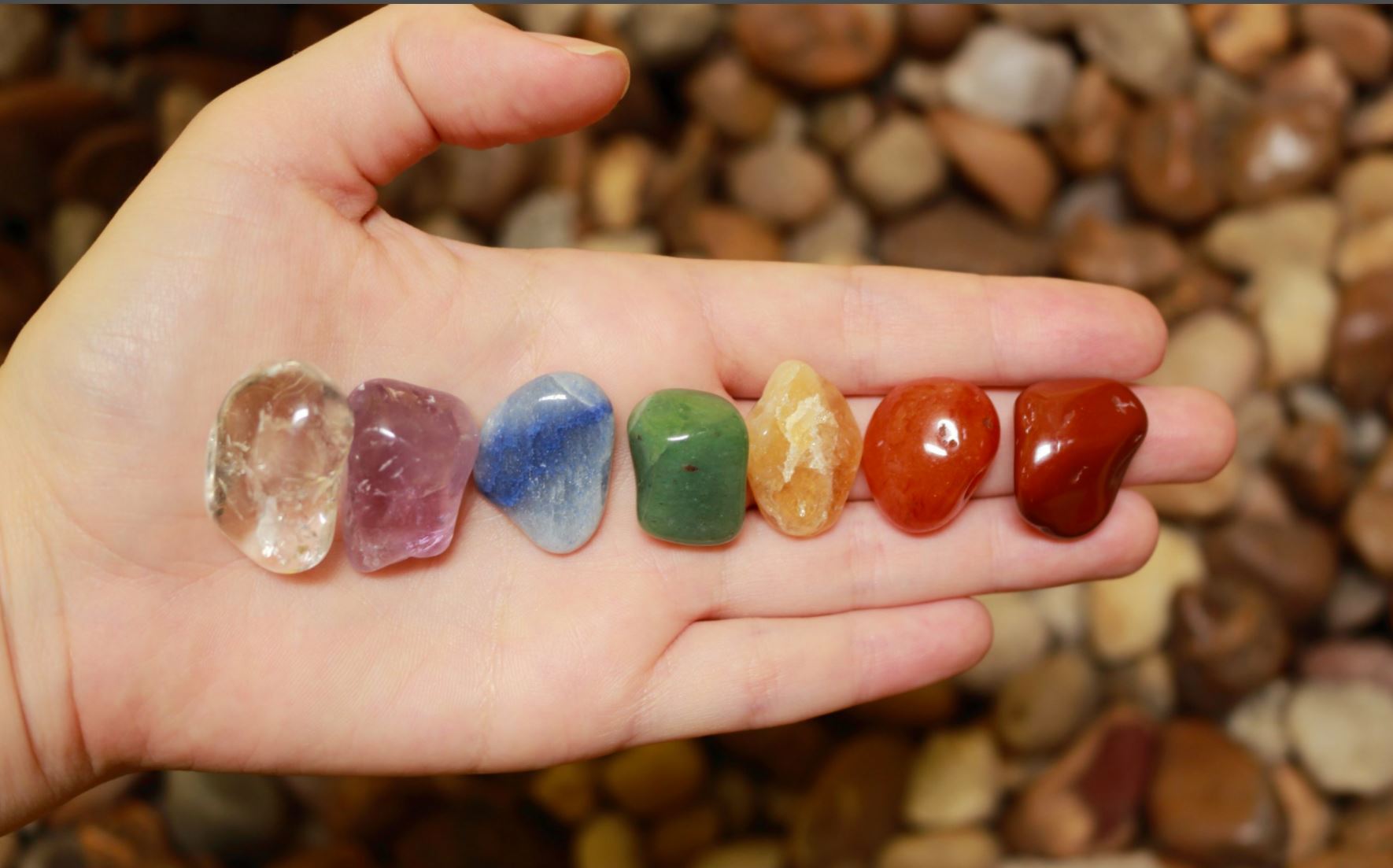
Healing stones and chakras are part of spiritual practice for many people, but they are not a medical system. Chakras are subtle-body concepts rather than anatomical structures that can be measured or diagnosed, and crystals have not been shown to cure disease, clear trauma, or restore physical energy. A stone can still be meaningful as a symbol, sensory object, or reminder of an intention.
The safest approach is to keep the practice external, optional, and connected to observable actions. Use the stone to ask a question or remember a value; use qualified care for health symptoms.
Chakras as a Reflection Map
Modern Western chakra charts commonly describe seven centers from the base of the spine to the crown of the head. Associations, colors, names, and practices vary across texts and traditions. A fixed rainbow chart should not be presented as the only ancient or universal system.
If you feel “blocked,” translate that spiritual word into a specific experience such as fear, conflict, low confidence, grief, difficulty speaking, indecision, or loss of meaning. Our guide to exploring blocked-chakra beliefs helps separate symbolic reflection from diagnosis.
Seven Chakra-and-Stone Pairings
The following pairings come from contemporary crystal practice. None is medically proven to work better than another. Choose an affordable stone, color, or ordinary object that supports the question.
Root: stability and basic needs
Black tourmaline, garnet, black onyx, and red jasper are often paired with the root chakra. Use the object as a prompt to check housing, food, sleep, money, safety, and daily routine. A stone cannot replace practical assistance or a safety plan.
Sacral: creativity and pleasure
Carnelian, orange calcite, moonstone, and fire opal are common symbolic choices. Ask what kind of play, creativity, rest, or consensual connection is missing. Pleasure does not require spending beyond your means or crossing anyone’s boundaries.
Solar plexus: agency and confidence
Citrine, yellow jasper, tiger’s eye, and amber are often used here. Amber is fossilized resin, not a mineral crystal. Let the color cue one specific act of preparation or courage. For a focused practice, see our solar plexus crystal guide.
Heart: compassion and relationships
Rose quartz, green aventurine, jade, and peridot are frequently associated with the heart. Use the symbolism to include self-compassion, reciprocity, grief, and boundaries. It cannot heal heart disease or make another person love you.
Throat: expression and listening
Turquoise, sodalite, aquamarine, and blue lace agate may represent communication. Prepare one honest sentence, one question, and one moment to listen. A throat symptom needs medical assessment rather than chakra treatment.
Third eye: perspective and discernment
Amethyst, fluorite, and blue chalcedony are often used as reminders to pause and consider multiple explanations. A stone does not prove clairvoyance or make an impression accurate.
Crown: meaning and connection
Clear quartz, amethyst, labradorite, and diamond may symbolize spirituality or purpose. Expensive gems are unnecessary. Reflection should not pressure you to adopt a belief, teacher, or purchase.
A Safe Chakra Reflection Practice
- Choose one theme: stability, creativity, agency, compassion, communication, perspective, or meaning.
- Hold or view the object: notice color, weight, temperature, and texture.
- Name the experience: describe what is happening without diagnosing an energy blockage.
- Select one action: make a call, write a boundary, eat a meal, gather information, rest, or ask for support.
- Review: note what changed and whether a different kind of help is needed.
You may place a light, smooth stone near—not heavily on—a comfortable area while resting. Stop if there is pain, numbness, dizziness, panic, or discomfort. Pregnancy, recent surgery, implanted devices, skin conditions, and mobility limits may require additional care or an entirely different method.
Jewelry, Pockets, Baths, and Sleep
Jewelry can serve as a discreet reminder, but check metal allergies, sharp settings, choking risks, and snag hazards. Remove pieces for activities where jewelry is unsafe. Keep small stones away from babies, children, pets, and anyone likely to swallow them.
Do not place unknown minerals in bathwater or drinking water. Some materials dissolve, release substances, fracture with heat, stain surfaces, or have sharp edges. The National Capital Poison Center warns that some crystal products may contain toxic materials and that swallowed stones can cause choking. Never grind or inhale mineral dust.
Sleeping with a stone under a pillow can create a hard pressure point or choking hazard and does not guarantee better dreams. Place a larger object on a stable bedside surface instead, away from children and pets.
Meditation and Health Claims
Meditation may support some people, but it does not activate a medically verified chakra or guarantee emotional balance. The National Center for Complementary and Integrative Health summarizes potential benefits, research limits, and reported negative effects. Begin briefly and stop if meditation intensifies distress, pain, or dissociation.
Persistent pain, digestive symptoms, mood changes, breathing difficulty, neurological symptoms, or other health concerns need appropriate assessment. Do not assign a symptom to a chakra because of its body location. Spiritual symbolism can accompany medical or mental-health care, not replace it.
Buying Stones Without Being Exploited
No price, rarity, or certification proves spiritual power. Compare descriptions, ask whether a stone is treated or synthetic, and buy only within your budget. The Federal Trade Commission’s scam guidance illustrates common pressure tactics around trust and money; the same practical rule applies here: do not send money or personal financial information because someone creates urgency or fear.
A reader or seller should not diagnose illness, guarantee healing, claim that one costly stone is required, or threaten consequences if you refuse a cleanse. Leave when the sale depends on fear.
Frequently Asked Questions
Can healing stones balance chakras?
There is no scientific evidence that stones physically balance chakras. They may be used as spiritual symbols or sensory reminders during reflection.
Can chakra stones treat health symptoms?
No. They should not replace medical or mental-health evaluation. Persistent, severe, new, or concerning symptoms need qualified care.
Is it safe to put crystals in bathwater?
Not all minerals are safe in water or heat. Some can dissolve, release substances, fracture, or create sharp edges. Keep unknown stones out of baths and drinking water.
Do I need a specific stone for each chakra?
No. Pairings vary, and an affordable stone, color card, bead, or ordinary object can support the same reflective intention.