
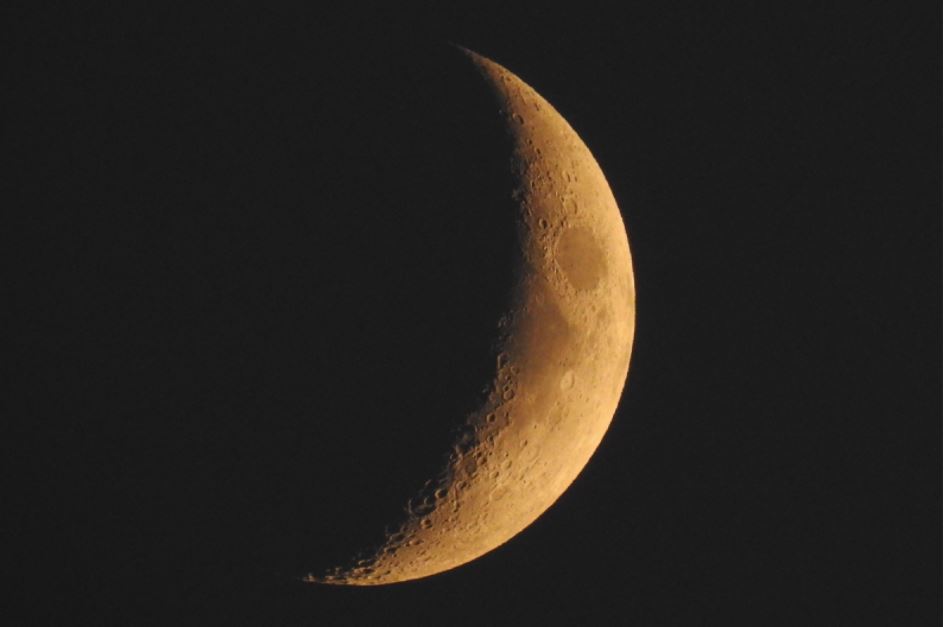
The Moon’s changing appearance provides a visible monthly rhythm, which is why many cultures and spiritual practices use lunar phases for calendars, reflection, and ritual. The phases do not reliably dictate your emotions, energy, relationships, fertility, or decisions. You can still use them as memorable prompts, much like a weekly planner or seasonal tradition.
A grounded lunar practice separates astronomy from symbolism: learn what the Moon is physically doing, then choose what the phase means in your own reflective routine.
What Causes Moon Phases?
The Moon does not produce its own visible light; sunlight illuminates half of it. As the Moon orbits Earth, we see different portions of that illuminated half. The NASA guide to Moon phases illustrates the repeating sequence and its geometry.
A complete phase cycle, from one new moon to the next, takes about 29.5 days. The new moon is near the Sun’s direction in our sky, so its illuminated side mostly faces away from Earth. At full moon, Earth is roughly between the Sun and Moon, so the near side appears illuminated. Exact alignment is uncommon; when alignment is close enough, an eclipse can occur.
The Moon, Gravity, and Tides
The Moon’s gravity contributes strongly to ocean tides, along with the Sun and local factors such as coastline, water depth, winds, and atmospheric pressure. New and full moons generally produce spring tides, when the difference between high and low tide is greater. First and third quarter moons generally produce neap tides, with a smaller tidal range.
The National Ocean Service explanation of tidal variations describes how the relative positions of the Sun, Moon, and Earth contribute to spring and neap tides. The fact that the human body contains water does not mean lunar gravity pulls human emotions like ocean tides. Oceans form enormous connected bodies of water; physiology and mood do not follow that analogy.
Does a Full Moon Change Sleep or Mood?
Research on lunar phases and human sleep or behavior has produced mixed and often small findings. Study design, artificial light, expectations, location, and chance can affect results. There is no sound basis for claiming that more than 30 percent of the world’s population loses sleep at full moon, or that a full moon necessarily creates conflict and intense emotion.
If you notice a personal pattern, track bedtime, wake time, light exposure, caffeine, alcohol, stress, medication, and the lunar phase before drawing a conclusion. The National Heart, Lung, and Blood Institute explains established effects of sleep deficiency and when sleep problems matter. Persistent insomnia or major mood changes deserve appropriate care regardless of the Moon.
Eight Phases as Reflection Prompts
The suggestions below are optional metaphors, not predictions about how you should feel.
New moon: choose a direction
Name one priority for the coming cycle. Rest if you need it, but the phase does not biologically require low energy or an empty calendar.
Waxing crescent: define the first step
Write a small action, the time and place you will do it, and a likely obstacle. Visualization is most useful when paired with a plan.
First quarter: make a decision
Review the available evidence and choose a reversible next step. This phase does not cause hardship or force a yes-or-no moment.
Waxing gibbous: revise
Notice what is working, gather feedback, and adjust the method. If you use intuition, pair the impression with alternatives and facts; our guide to developing intuition provides a calibration method.
Full moon: review what is visible
Use the bright phase as a reminder to assess progress, celebrate effort, and notice unfinished work. It does not guarantee heightened emotion, power, or revelation.
Waning gibbous: share and appreciate
Offer thanks, share what you learned, or support someone within your capacity. Gratitude is optional and should not be used to suppress grief or anger.
Third quarter: release or repair
Choose one commitment to end, one item to remove, or one repair to make. Forgiveness is not required, and letting go does not mean restoring unsafe contact.
Waning crescent: pause and prepare
Review the cycle and reduce unnecessary demands if possible. Rest is a human need throughout the month, not only during a lunar phase.
Build a Monthly Moon Journal
Use five columns: date and phase, observation, mood or energy, relevant circumstances, and chosen action. Record before interpreting. After three cycles, review whether any pattern remains when sleep, work, health, and stress are considered.
Do not count only the entries that confirm your expectation. If you plan an intention at each new moon, define an observable action and outcome. For practical help, our life-change guide explains cues, obstacle plans, and weekly revision.
Moon-Watching Safety
The Moon is generally safe to view with the unaided eye. A telescope or binoculars can make lunar detail more interesting, but never point optical equipment at the Sun. During a solar eclipse, ordinary sunglasses are not sufficient; use appropriate certified eclipse viewers and follow current safety guidance.
For nighttime outings, check weather, temperature, air quality, terrain, traffic, wildlife, and local access rules. Bring a light, tell someone your route when appropriate, and do not trespass for a ritual or photograph.
Use Symbolism Without Giving Up Agency
The lunar cycle can be a beautiful clock for reflection. It should not decide when you seek medical care, sign a contract, leave a relationship, invest money, or address danger. Avoid readers who claim a phase proves a curse, guarantees manifestation, or requires an expensive cleansing.
Your feelings are valid on every phase. Let the Moon offer a prompt, then let evidence, consent, values, and real circumstances guide the action.
Frequently Asked Questions
Does the full moon affect emotions?
There is no reliable rule that a full moon intensifies everyone’s emotions. Expectations, sleep, stress, health, and circumstances can influence how you feel.
Why does the Moon cause tides but not pull body water the same way?
Tides involve enormous connected bodies of water and the gravitational relationship among Earth, Moon, and Sun. The body’s water does not behave like an ocean, so the analogy does not establish emotional effects.
Which moon phase is best for setting intentions?
No phase is objectively best. Many people choose the new moon as a memorable symbol of beginning, but any date works when an intention is specific and paired with action.
Can I use moon phases to make important decisions?
Use phases as reflection prompts, not as the sole basis for medical, legal, financial, safety, or relationship decisions. Gather evidence and qualified guidance when stakes are high.