
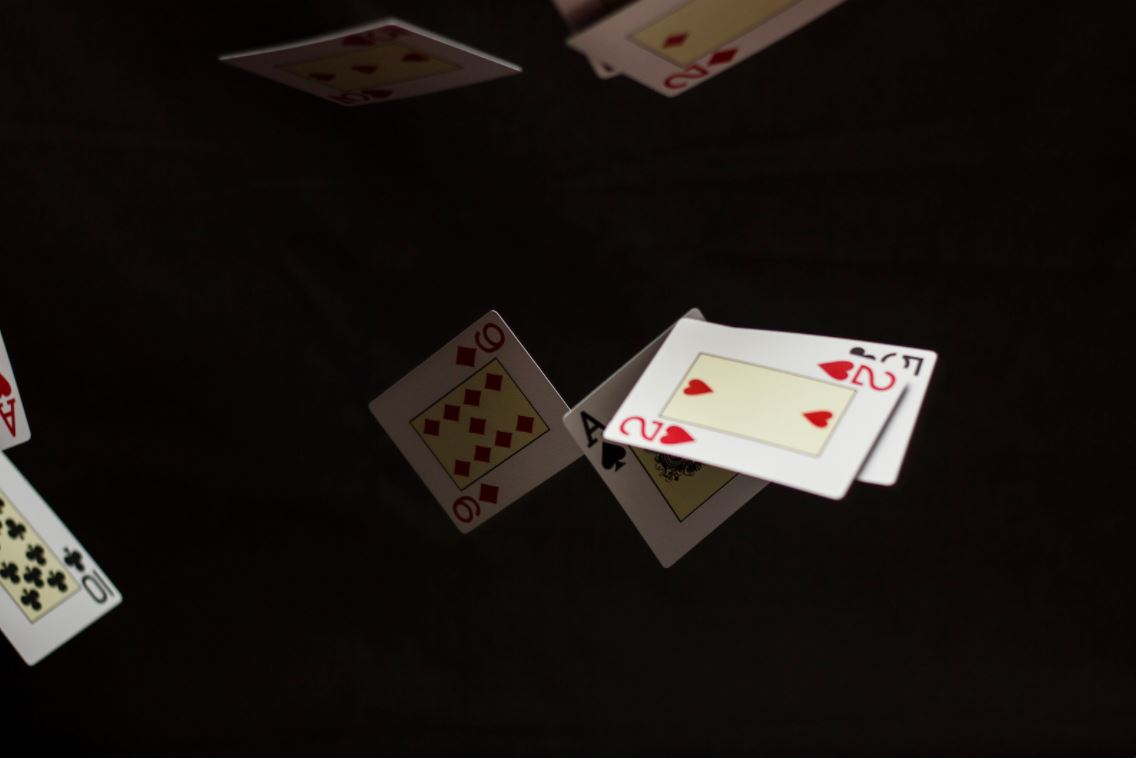
Cartomancy is the practice of using cards for symbolic reflection or divination. A standard 52-card deck can be used without buying a tarot or oracle deck. The cards do not reliably predict the future, diagnose illness, reveal another person’s private thoughts, or guarantee an outcome. Their value comes from the questions, associations, and conversation they help you explore.
You can approach a reading spiritually, creatively, or as structured journaling. State the approach clearly, especially when reading for someone else.
Playing Cards and Tarot Are Related but Different
Playing-card history developed across regions and changed over centuries; there is no single simple path from one culture to every modern deck. The Encyclopaedia Britannica history of playing cards describes early card traditions and the development of suit systems in Europe.
A standard playing deck usually has four suits, 13 ranks per suit, and sometimes jokers. A tarot deck commonly has 78 cards: 22 Major Arcana and 56 Minor Arcana, including four court ranks per suit. Playing cards do not contain a complete Major Arcana or tarot knights. A joker may remind some readers of the Fool, but it is not historically or structurally a full substitute.
If you want to study tarot’s separate archetypal sequence, see our Major Arcana guide.
Choose a Suit System
Cartomancy meanings vary by reader and tradition. One common modern mapping is:
- Hearts: feelings, relationships, care, and home.
- Diamonds: resources, work, skills, and practical matters.
- Clubs: action, creativity, projects, and effort.
- Spades: thought, conflict, decisions, and challenges.
These are conventions, not laws. Write your chosen system before the reading so you do not change meanings after seeing the cards. Avoid assigning face cards to gender, race, hair color, eye color, or complexion. A court card can represent a role, behavior, influence, or part of the questioner.
A Simple Number and Court Guide
- Ace: beginning, opportunity, or concentrated theme.
- Two: choice, partnership, contrast, or balance.
- Three: development, cooperation, or complication.
- Four: structure, pause, stability, or limitation.
- Five: disruption, adaptation, tension, or change.
- Six: adjustment, support, exchange, or movement.
- Seven: assessment, uncertainty, strategy, or reflection.
- Eight: effort, momentum, repetition, or restriction.
- Nine: nearing completion, independence, or intensity.
- Ten: culmination, responsibility, transition, or excess.
- Jack: learner, messenger, curiosity, or emerging action.
- Queen: stewardship, receptivity, judgment, or mature influence.
- King: leadership, authority, responsibility, or established influence.
Let context decide which possibility fits. A Five of Spades does not automatically mean bad luck or a sneaky person.
How to Do a Three-Card Reading
- Set a useful question: Ask “What should I consider before this conversation?” rather than “Exactly what will happen?”
- Name the positions: Try situation, challenge, and next step; or what I know, what I may be missing, and what to verify.
- Shuffle and draw: Use any comfortable method. Randomness is part of the prompt, not proof of supernatural selection.
- Describe before predicting: Note suit, number, color, repetition, contrast, and your first association.
- Generate alternatives: Write at least two interpretations for each card.
- Choose a reversible action: Gather information, ask a respectful question, make a small plan, or wait before committing.
A reading becomes safer when intuition is paired with calibration. Our guide to developing intuition without ignoring evidence explains how to record impressions, consider alternatives, and review outcomes.
Optional Jokers and Reversals
You may remove the jokers or define them before shuffling as surprise, freedom, disruption, or an unknown factor. Do not decide only after drawing one.
Most playing-card designs look similar when rotated, so reversals can be hard to track. You can skip them, mark card sleeves without damaging the deck, or use a single meaning with constructive and challenging expressions. More complexity does not make a reading more accurate.
A Ten-Card Reflection Spread
If you want a longer reading, use ten positions: present question, immediate tension, background, recent influence, conscious aim, near-term consideration, your stance, environment, hope or fear, and what to review next. Call the final card a possible direction—not “what your future holds.”
Lay the cards in any clear arrangement and keep a written position list. A spread organizes reflection; it cannot determine another person’s choices or a fixed future.
High-Stakes Questions Need More Than Cards
Do not use cartomancy as the sole basis for medical treatment, legal action, investing, debt, gambling, safety, pregnancy, or leaving or returning to an abusive relationship. Cards may help you name a concern, but facts and qualified support must guide the decision.
Health products or services sold with miracle promises deserve scrutiny. The U.S. Food and Drug Administration explains common health-fraud warning signs. Likewise, anyone demanding gift cards for a reading, curse removal, or emergency is using a payment method strongly associated with scams; the Federal Trade Commission explains that legitimate businesses and government agencies do not demand gift-card payment.
Reading for Another Person
Get consent, protect privacy, and explain that the reading is interpretive. Avoid declaring death, disease, pregnancy, infidelity, criminal conduct, or another person’s secret feelings. Do not frighten someone into repeated sessions.
Use collaborative language: “One way to read this is…” and “Does that connect with anything you already know?” Let the person reject an interpretation. A responsible reader supports agency rather than claiming authority over a client’s future.
Frequently Asked Questions
Can regular playing cards be used for fortune telling?
Yes, many cartomancy systems use a standard deck. Meanings vary, and the cards are best treated as symbolic reflection rather than reliable prediction.
Are playing cards the same as tarot cards?
No. They share some structural similarities, but a tarot deck usually has 78 cards, including Major Arcana and four court ranks. A standard playing deck has 52 cards plus optional jokers.
What is the easiest cartomancy spread?
A three-card spread is a practical start. Define positions such as situation, challenge, and next step before drawing, then consider more than one interpretation.
Can cards answer medical or financial questions?
They may help you identify concerns to investigate, but they should never replace qualified medical, legal, financial, or safety guidance or verified information.